Solutions to Chapter 31 Truth in FOL
A. Consider the following interpretation:
-
‣
The domain comprises only Corwin and Benedict
-
‣
‘’ is to be true of both Corwin and Benedict
-
‣
‘’ is to be true of Benedict only
-
‣
‘’ is to be true of no one
-
‣
‘’ is to refer to Corwin
Determine whether each of the following sentences is true or false in that interpretation:
-
1.
False
-
2.
True
-
3.
True
-
4.
True
-
5.
False
-
6.
True
-
7.
False
-
8.
True
-
9.
True
B. Consider the following interpretation:
-
‣
The domain comprises only Lemmy, Courtney and Eddy
-
‣
‘’ is to be true of Lemmy, Courtney and Eddy.
-
‣
‘’ is to be true of and only of Courtney
-
‣
‘’ is to be true of and only of Lemmy and Eddy
-
‣
‘’ is to refer to Courtney
-
‣
‘’ is to refer to Eddy
Determine whether each of the following sentences is true or false in that interpretation:
-
1.
True
-
2.
False
-
3.
True
-
4.
True
-
5.
True
-
6.
True
-
7.
False
-
8.
True
-
9.
True
-
10.
True
-
11.
True
-
12.
True
-
13.
True
-
14.
False
-
15.
True
C. Following the diagram conventions introduced at the end of §23, consider the following interpretation:
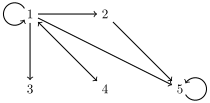
Determine whether each of the following sentences is true or false in that interpretation:
-
1.
True
-
2.
False
-
3.
True
-
4.
False
-
5.
False
-
6.
False
-
7.
True
-
8.
True
-
9.
True
-
10.
True
-
11.
False
-
12.
True